
Our work
Our work, without names.
For us, client confidentiality comes first. Here you’ll find how things were, what we did and how it turned out, with the numbers.
August 2026
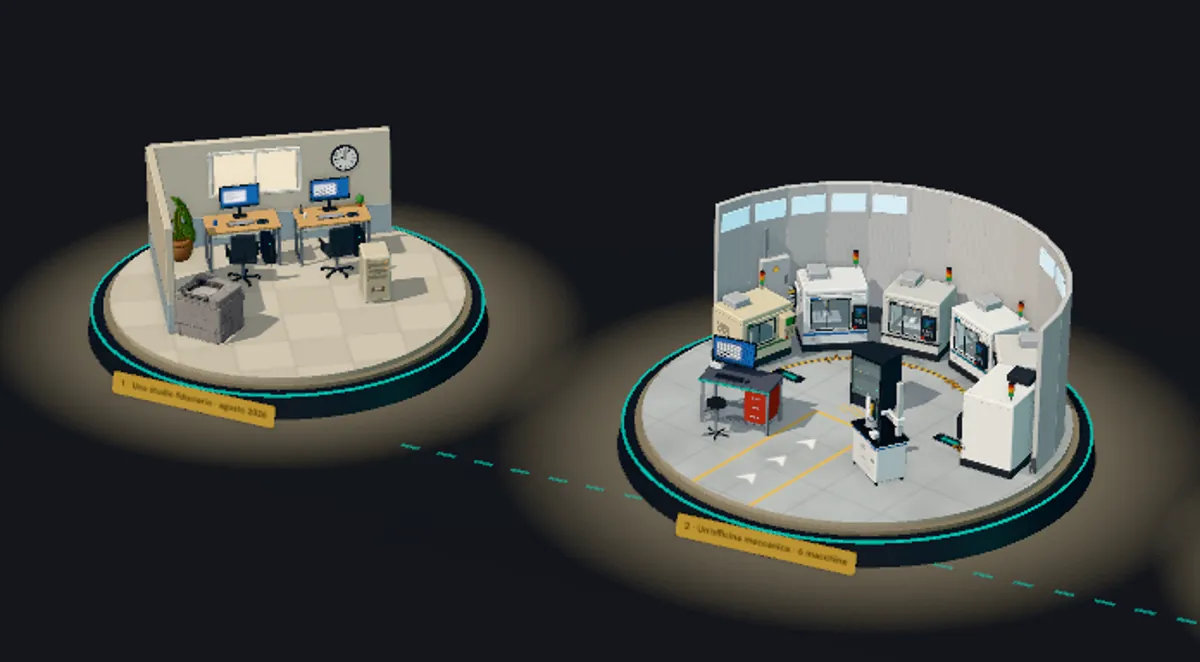
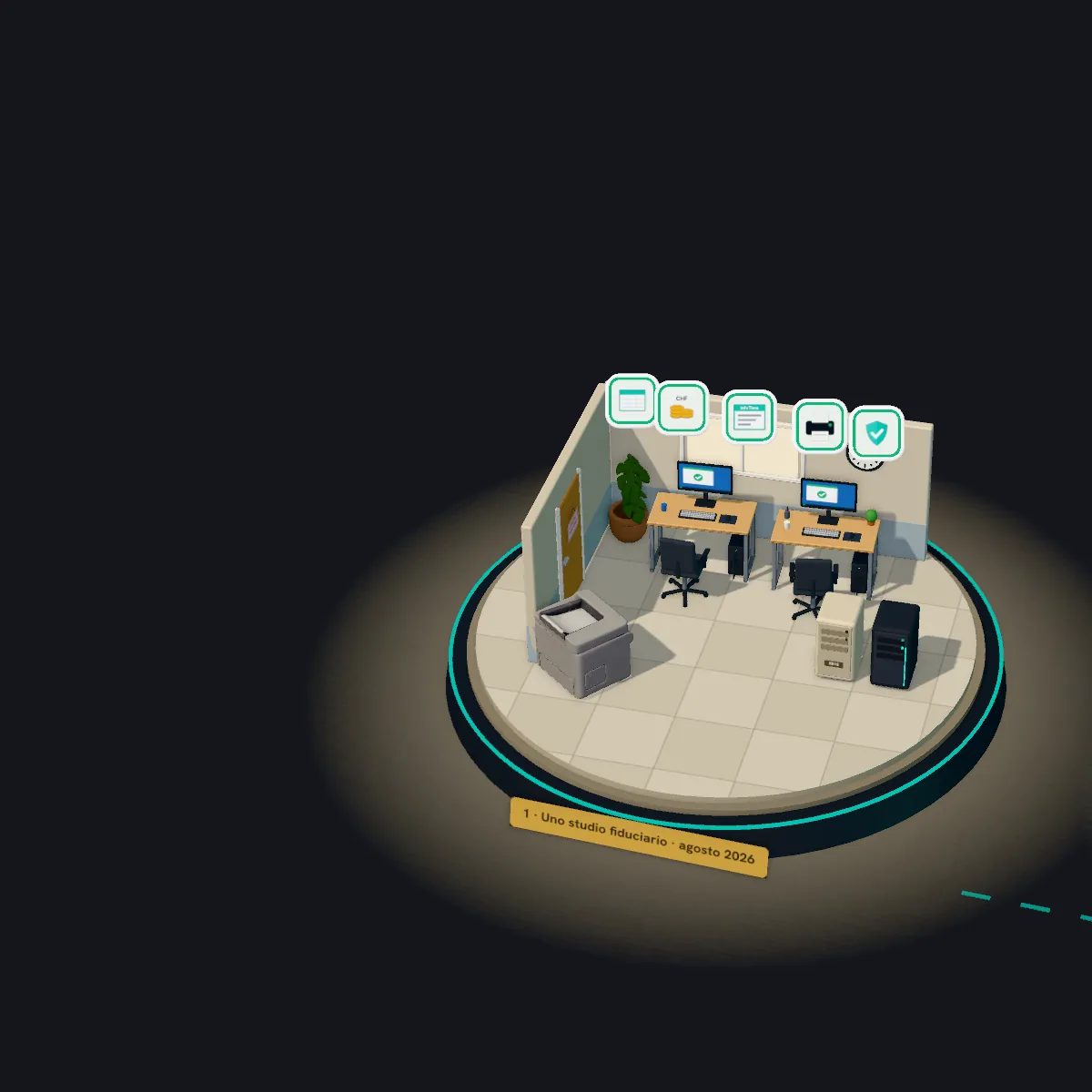
An accounting firm goes on holiday, and we replace its 2012 server.
How it was
The firm was working with a server from 2012: the server being the office’s central computer, holding the shared folder for the whole firm.
What we did
We prepared the new server in our lab. On the night of 3 to 4 August we moved the firm’s shared folder onto it. On 6 August, with the firm closed for the holidays, we took it to their office.
The shared folder, in one night:
- 404,784
- files
- 64,306
- folders
- 383
- GB
- 5:19
- hours and minutes
- 0
- errors
How it went
Everyone’s computers stayed connected to the server (in the ‘domain’) without having to be added again; on handover day each PC needed small fixes. By the end of the day accounting, payroll, InfoTime, the printers and the backups were all working.
In six weeks
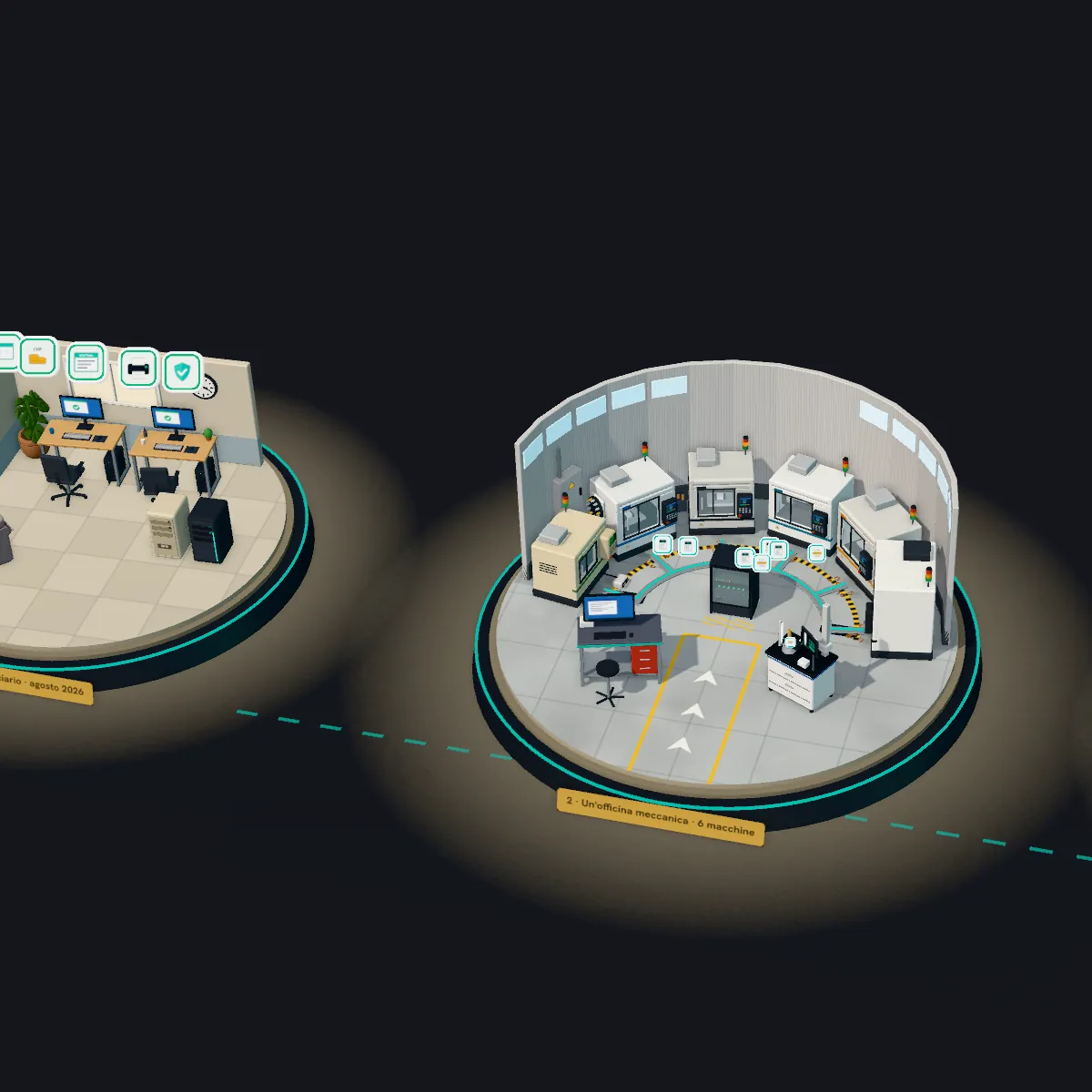
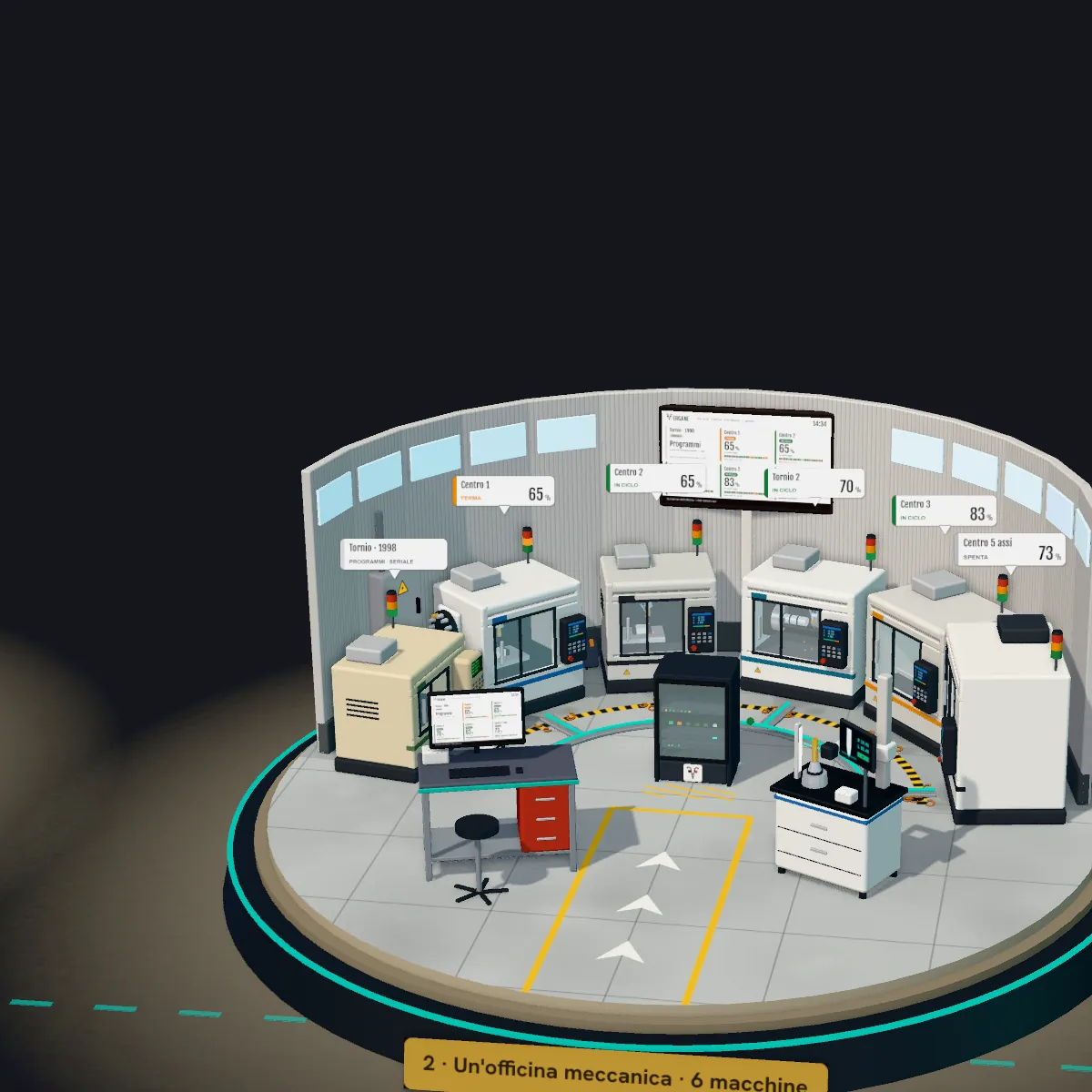
A machine shop: six machines on the network, from a 1998 control to a 5-axis machine.
How it was
Every day programs reached the machines on a USB stick, one machine at a time. Tool offsets, measured on the presetter, were retyped by hand into the control. And from the office nobody could see whether a machine was working or stopped: someone had to go and look.
What we did
In six weeks we connected six machines of different generations to the workshop network, from a 1998 control to a 5-axis machine, each through the port it already had.
- 6
- machines
- 6
- weeks
How it went
No more USB sticks every day: programs go from the server to the machine. Offsets go from the presetter to the machine without being retyped. And no recurring fees.
Our software

ERGANE: it reads the machines, it doesn’t control them.
It runs on the workshop’s server and talks to the machines that are already there.
The machines talk.
Where the control has a network port, ERGANE reads whether the machine is working, stopped or in alarm, and how long it has run today. You can see it on the display board on the shop floor and on the office computer.
Programs come back.
After each transfer ERGANE reads the program back from the control and compares it with the one sent, line by line. The data stays on the workshop’s server.
July 2026
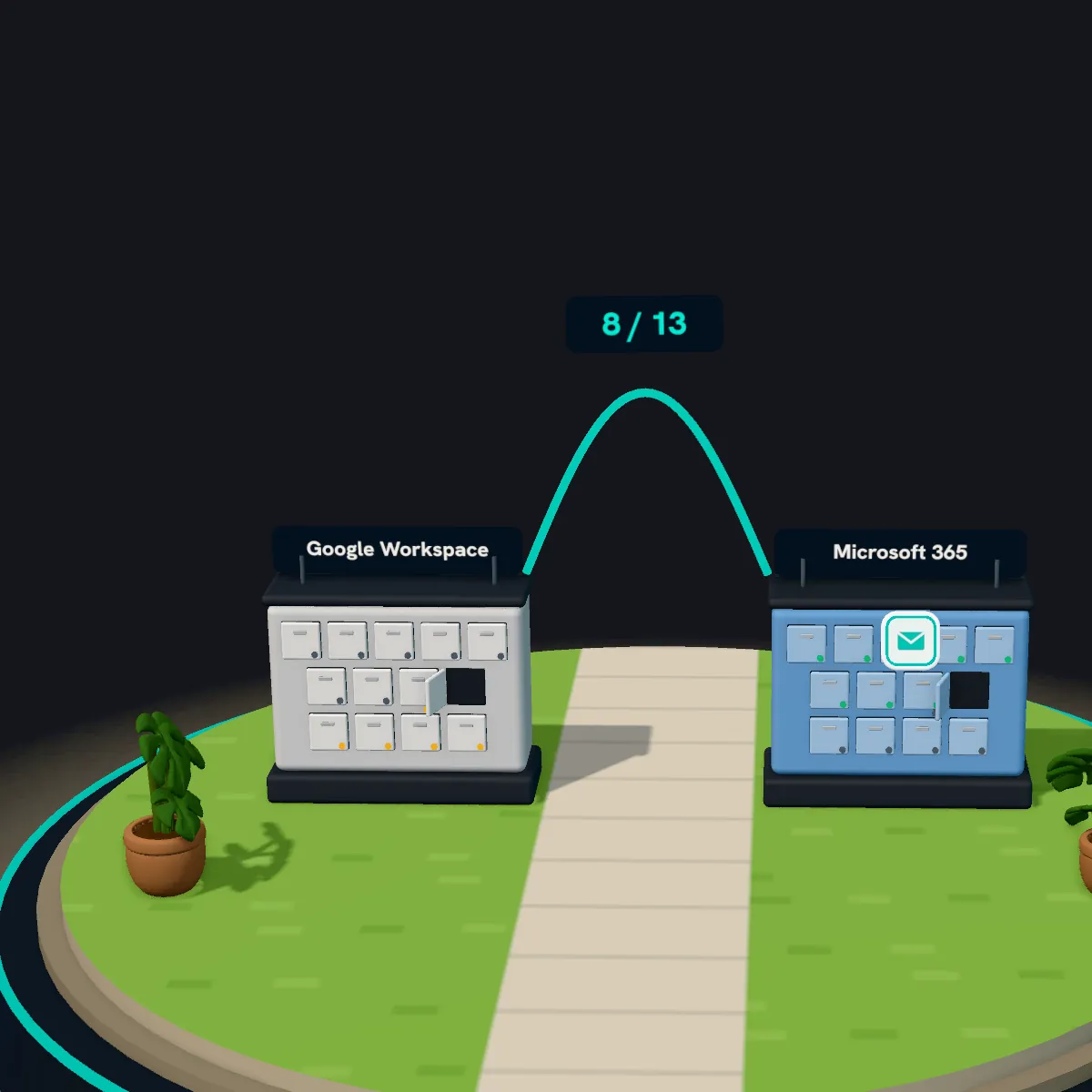
A company: 13 mailboxes, from Google Workspace to Microsoft 365.
What we did
At the end of July we moved the mailboxes from Google Workspace to Microsoft 365, one by one, with all the email already in them.
How it went
Every mailbox has a new password. We handed over the documentation: the mailboxes, the passwords and the details for setting up email.
September 2026
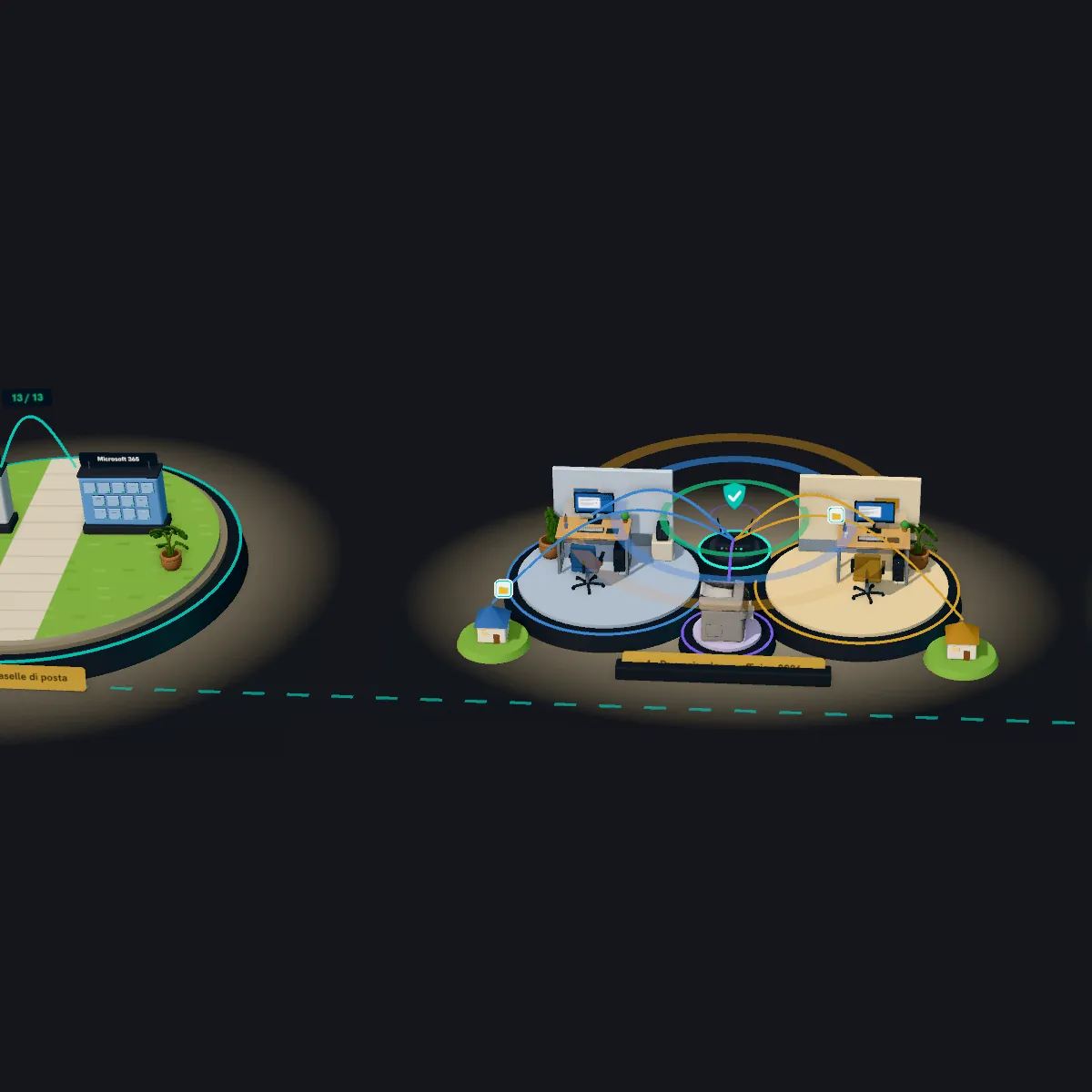
Two companies in the same office: a network each, one shared protection.
What we did
In August we prepared the firewall at our place in Riazzino, and in September we installed it in the office: it is the protection between the office and the internet. Each company has its own network, wired and Wi-Fi, and can’t see the other’s computers.
The printer sits on a separate network: both companies print to it. Guests have a Wi-Fi network that only leads to the internet.
- 2
- companies
- 4
- Wi-Fi networks
- 1
- firewall
How it went
From home, people work through the VPN, the protected connection to the office: each person can only get into their own company’s network.
July 2026
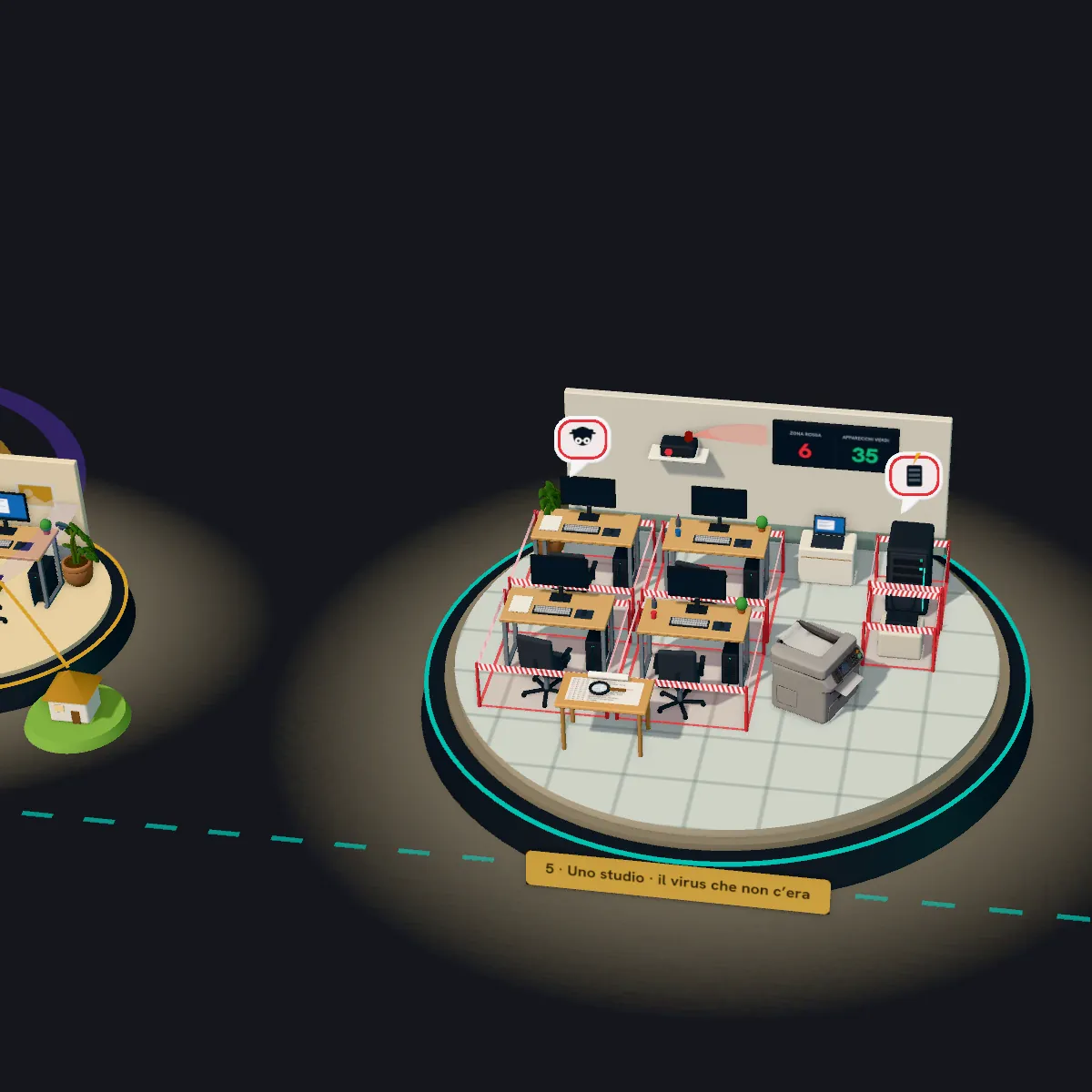
An office: a virus alarm on eight devices. There was no virus.
How it was
The system that monitors the office network reported an attack on the server and spyware on one computer, and isolated that computer by itself. On 13 July eight devices were in the red zone, including the server and the internet connection: the isolated computers were left without internet.
What we did
First we checked that nobody had broken into the server. Then we read the monitoring system’s logs: the ‘spyware’ was the antivirus update, which a rule from 2010 mistook for something else; the ‘attack’ was ordinary file reads from the server’s folders.
We checked the whole of the isolated computer with a rescue USB stick, without starting Windows: nothing turned up.
How it went
No infection, and no computer to reinstall. We corrected the faulty rules and took the eight devices out of the red zone: in the end all 41 on the network were green.
- 8
- devices unblocked
- 41
- devices green
- 0
- infections
August 2026
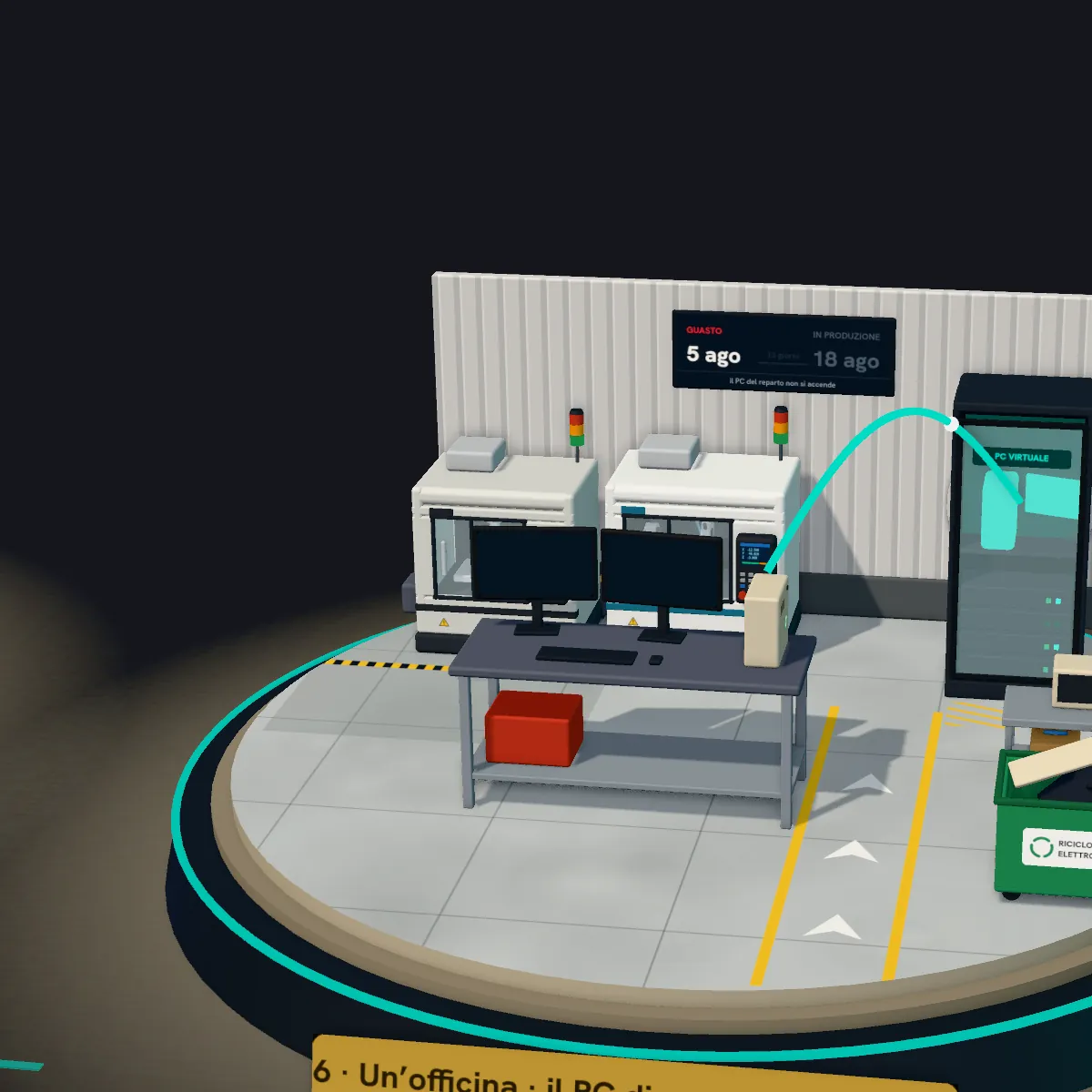
A workshop: the shop-floor PC breaks down and moves into the server.
How it was
On 5 August the shop-floor PC broke down and could not be recovered.
What we did
Instead of repairing it, we moved the computer into the server the workshop already had: it is now a virtual PC. We put the old programs back by reading the broken PC’s disk, which was intact.
On the shop floor an old recycled PC just acts as a screen: it switches on and logs in by itself, and holds no data or settings.
How it went
In production since 18 August, 13 days after the breakdown. If the connection drops, the session reopens by itself in about 3 seconds.
Then the finishing touches: windows were slow to redraw because the recycled PC’s graphics card was running at its minimum, and now they aren’t; a USB stick plugged in at the workbench shows up in the virtual PC.
- 13
- days after the breakdown
- 2
- monitors
- ~3
- seconds to reconnect
Have a similar job?