
Il software che sa ascoltare
It knows how long every machine runs. Even the iron from '95.
For owners and shop-floor managers
There's a CHF 300,000 machine on your floor that works every day and tells no one anything. ERGANE makes it talk — together with all the others, on your own workshop server.
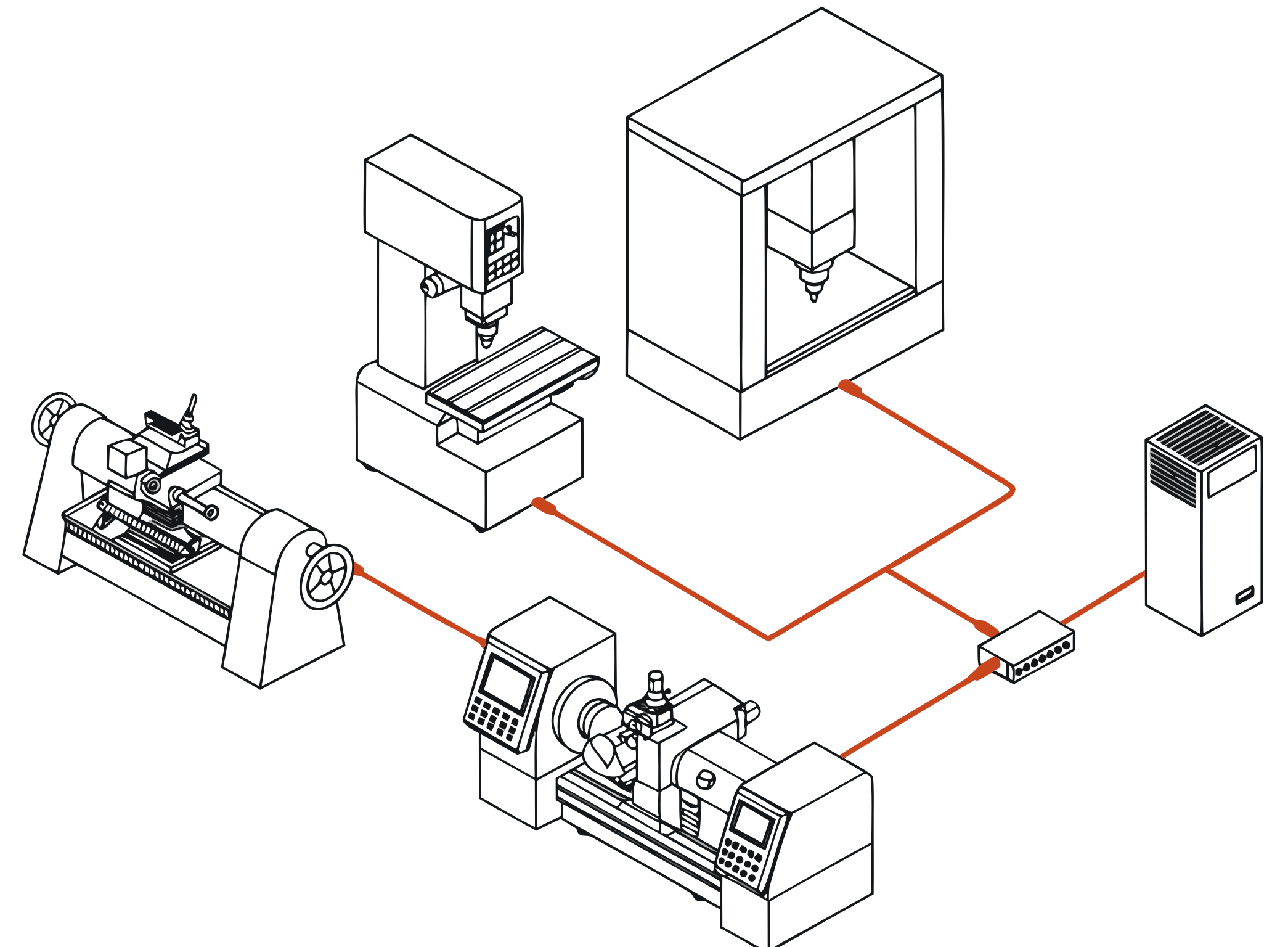
The machines talk. The programs come back.
Shop-floor software for CNC machine shopsOld and new machines, different makes · on-premise
The connection for the machines you already have.
Not an MES, not an ERP. The answer everyone gives you is to buy a new machine: we give a voice to the one that's already there. The owner stops running the shop from memory.
The shop floor, live. Not from memory.
ERGANE speaks each control's native language — whatever the make, old or new — and reads what the machine already knows about itself. No hardware to fit.

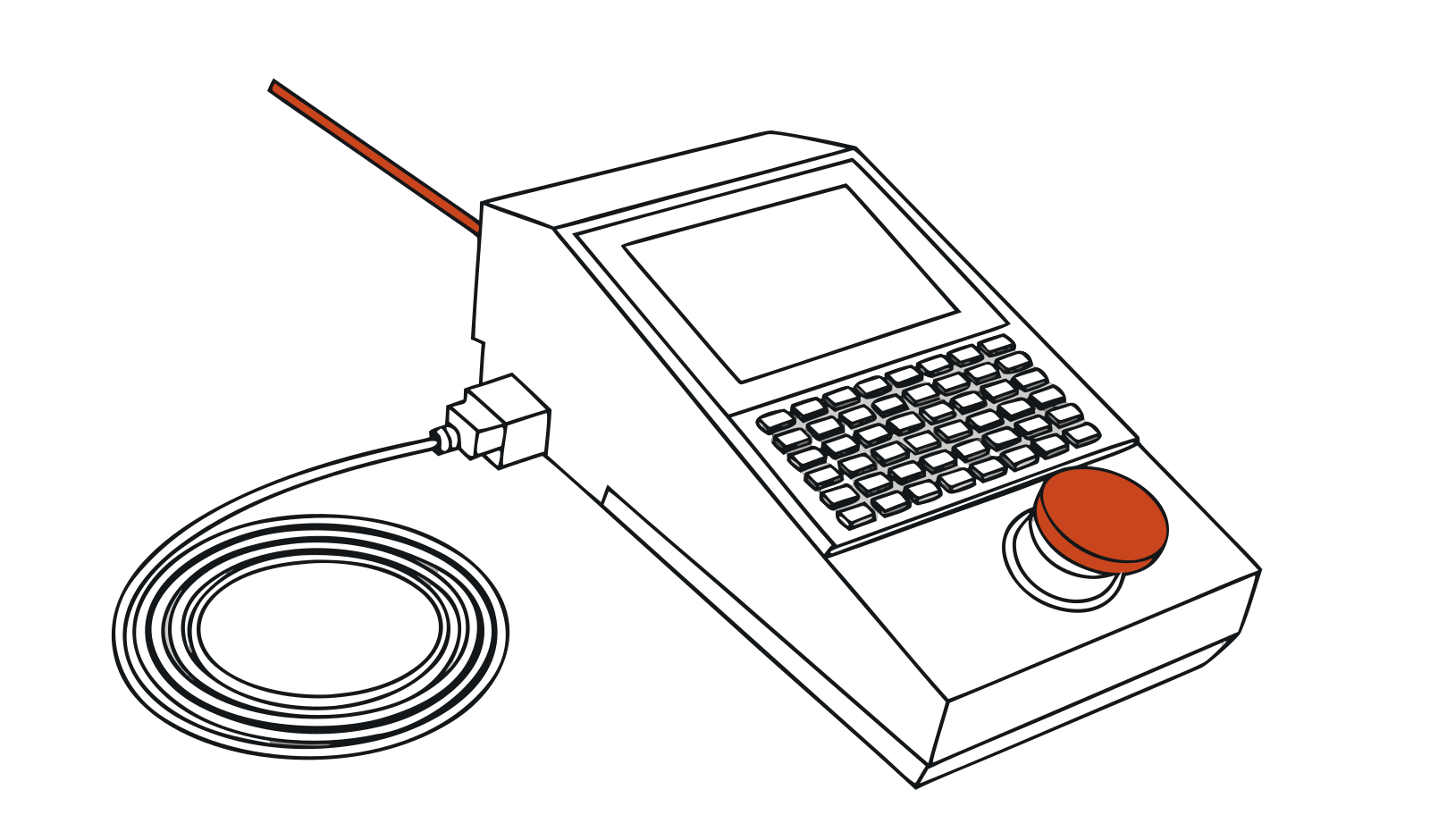
How many hours it really ran
Time in cut, downtime, alarms, parts made. Per shift, per day, per machine — the 1990s ones included.
Loads, feed, spindle
The numbers the control already holds, read live and kept over time. The toolpath shows in 2D and in 3D.
Mixed fleet, one screen
The iron from '95 and the brand-new centre on the same page. That's the thing the machine builder's portal won't do.
A control that isn't on the list?
That's not a no. We look at what's fitted, check whether it can be read — and if it can, we integrate it: you don't pay for the whole development, because that control then stays in the product.
Why nothing needs fitting on the machine. The control already has a way to talk — the network port, or the serial one. Nobody ever asked it: ERGANE asks. Where there's only serial, we bring the converter. Connecting is an hour's work, with no sensors and no boxes: we hook up to the control while the floor carries on as usual.
Send the program. And the program comes back.
The moment a CHF 4,000 part gets scrapped is almost always the same one: the wrong version ended up on the machine. ERGANE closes the loop.
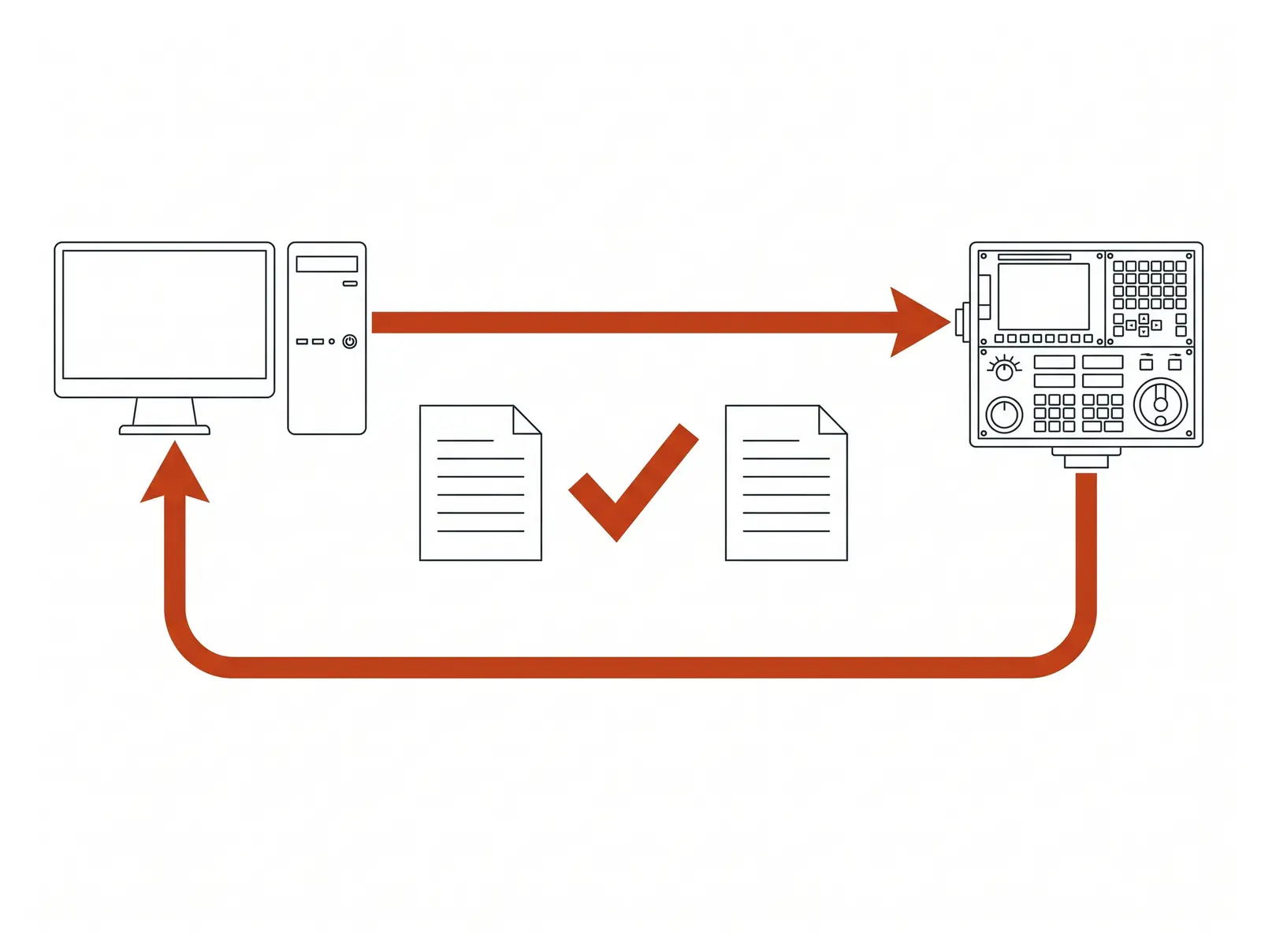
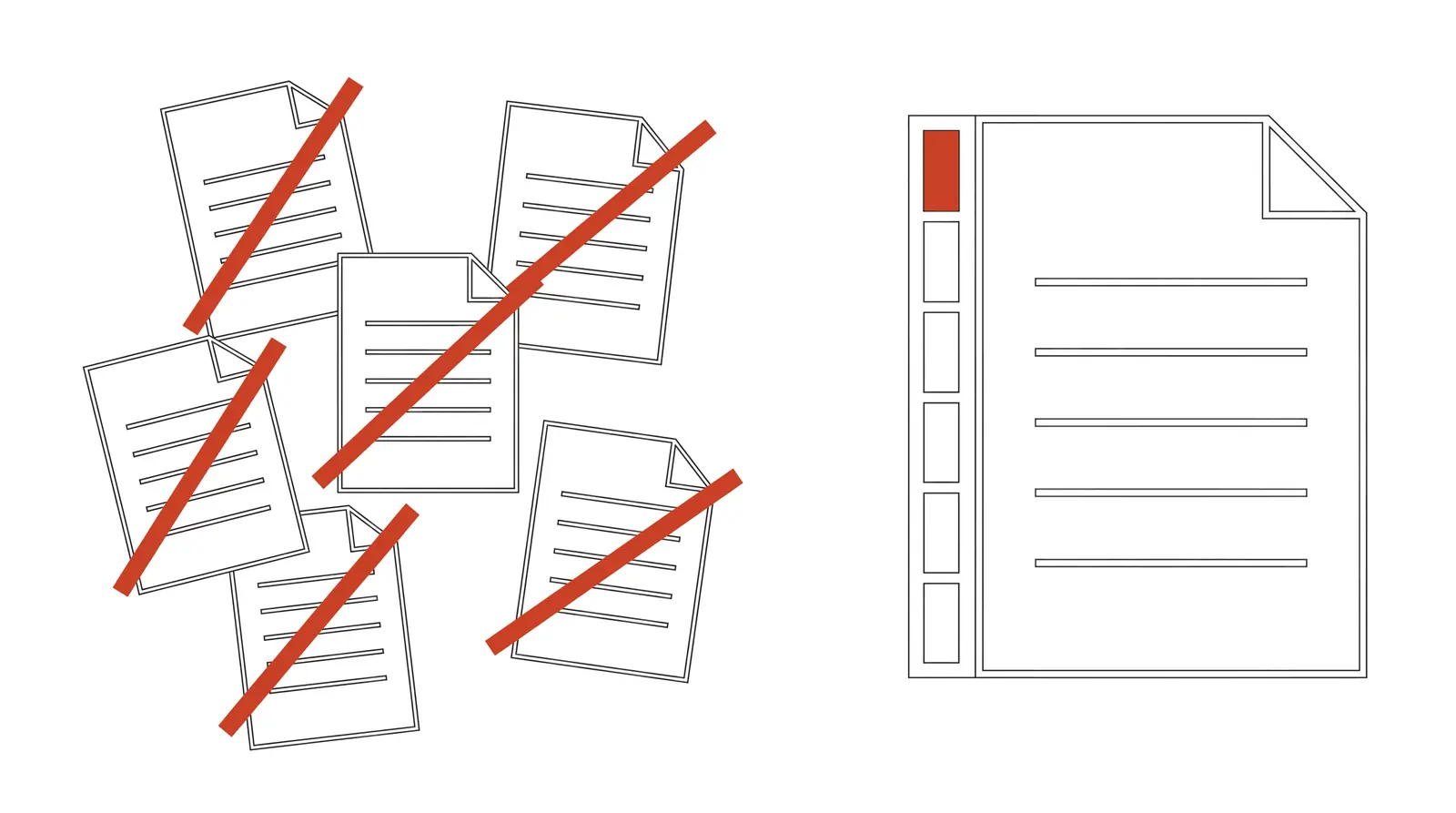
Every version, archived
Who changed what, and what changed between yesterday and today. Two versions compare line by line.
Straight from the network folder too
Programs already sitting on the server load onto the CNC with no USB sticks and no copy-paste.
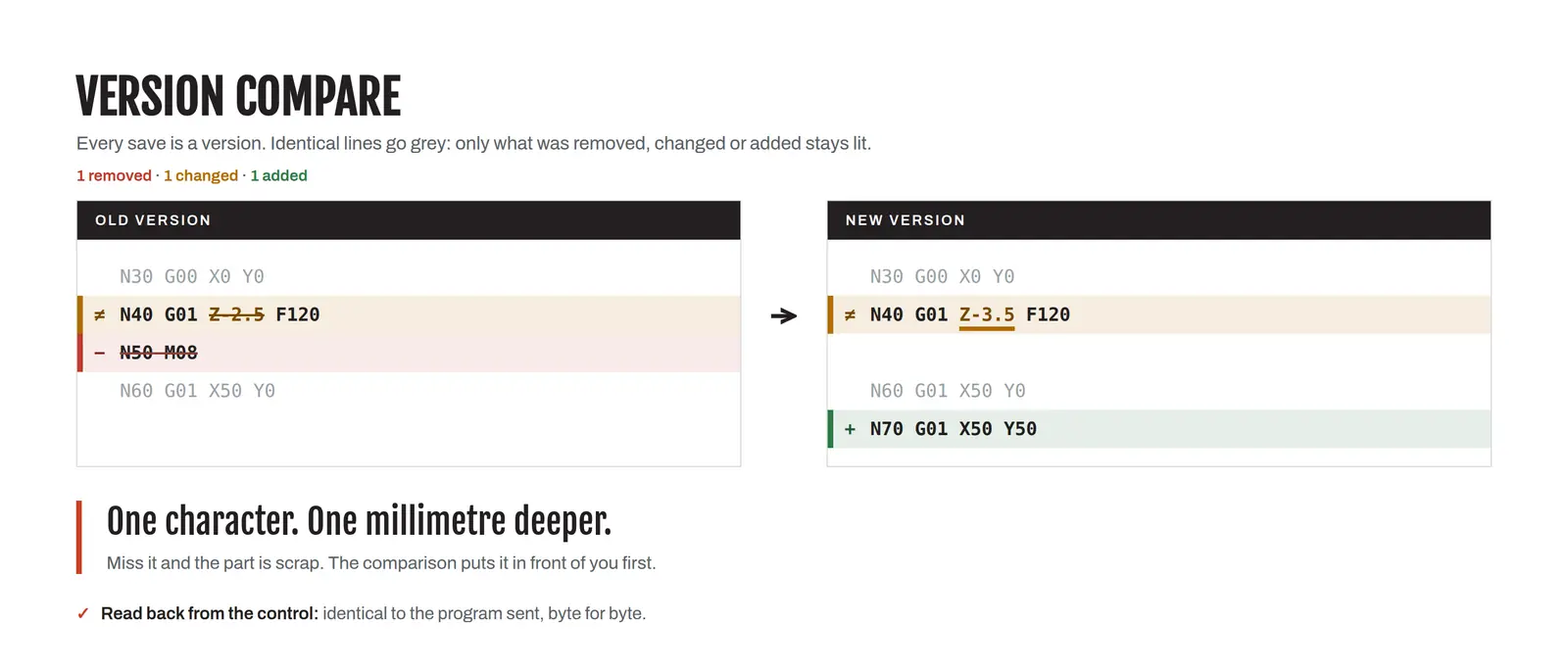
The compare is byte for byte. Not "looks the same": it is the same, or ERGANE says so.
The path, before the spindle turns.
ERGANE draws the program's toolpath on the part, in 2D. And while the machine is cutting, the real tool position rides on top of it, read from the control, trailing where it has been. Top, front, side — and in 3D.
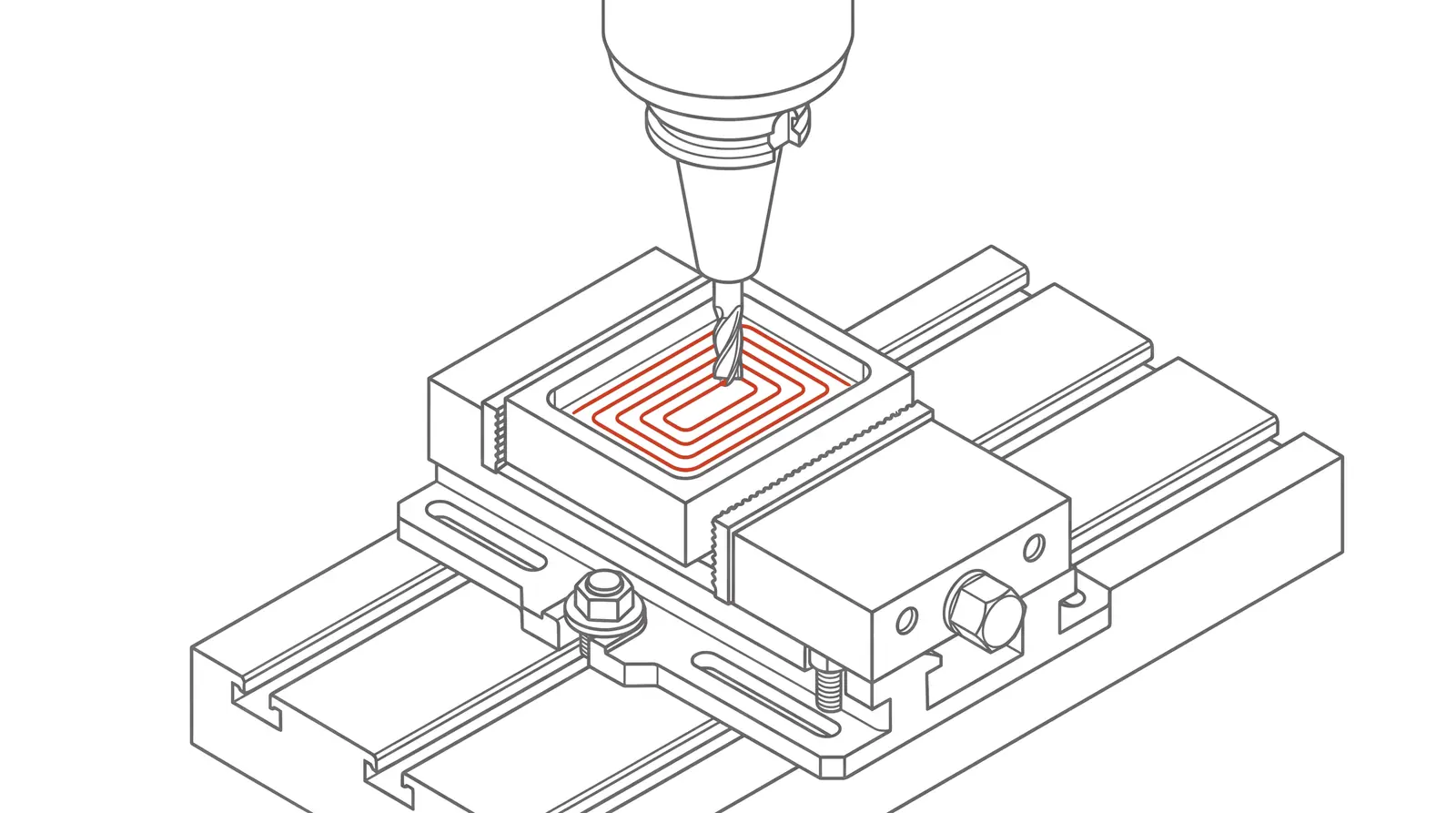
It's a view, not a safety system. It doesn't check collisions and it doesn't decide for you: it shows the path — the responsibility stays with whoever starts the cycle.
Measured tools reach the CNC.
Work offsets and tool offsets for every machine on one screen. If you measure on a Zoller presetter: the measured tool goes into the CNC's offsets without retyping the numbers by hand.
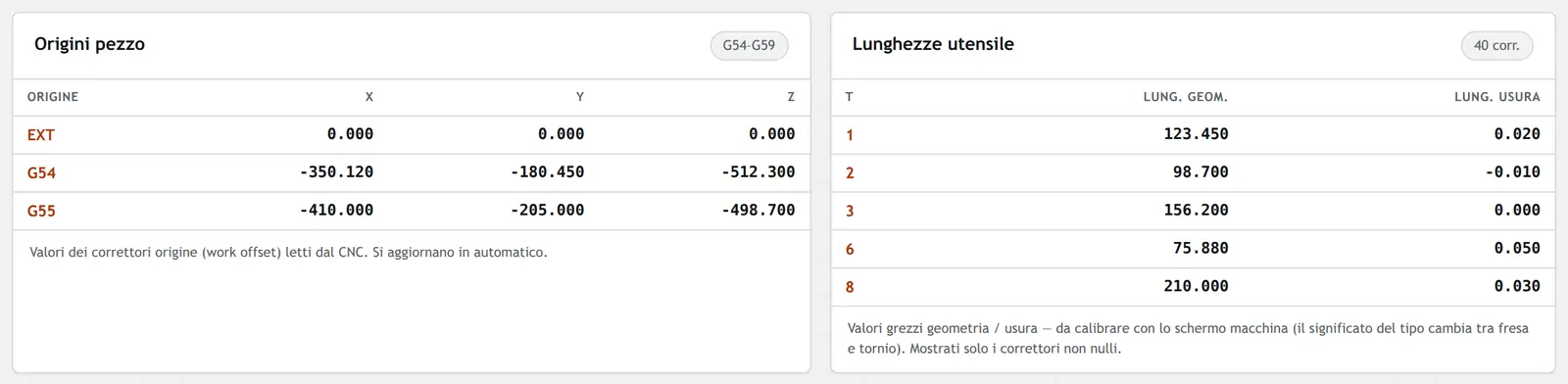
Offsets and tool data, per machine
The table read from the control: lengths, radii, wear. What is on the machine right now, not what someone remembers.
The compare, before anything is written
CNC values against presetter values, line by line. You see the difference before you touch anything.
It writes offsets, it does not move axes
ERGANE transfers the measured values. The operator starts the cycle, as always.
How long it ran, in one number.
Availability — cutting time over powered-on time —, parts produced, and how the machine's time splits: running, paused, stopped, alarm, off. Per shift, per day, per machine.
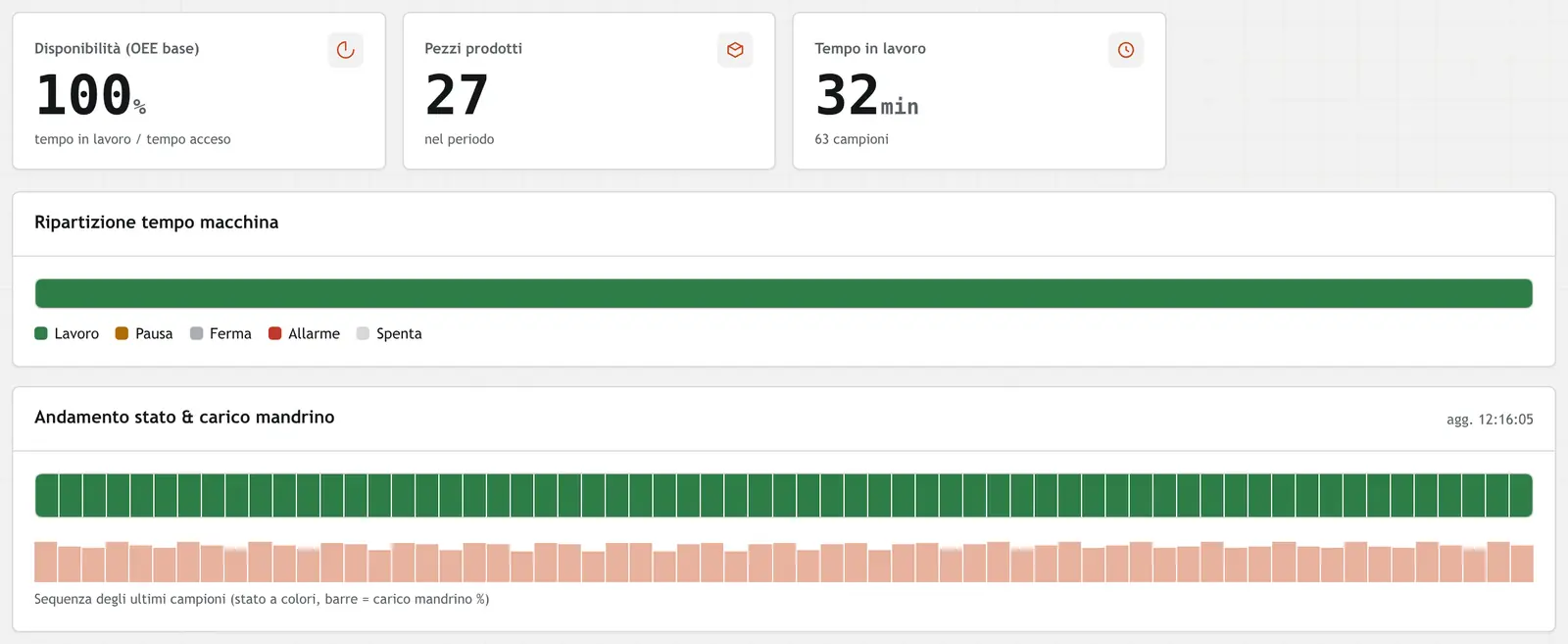
Availability, not "full OEE". ERGANE measures what the control can actually tell it: times, states, part counts. Performance and quality stay out — we do not invent them.
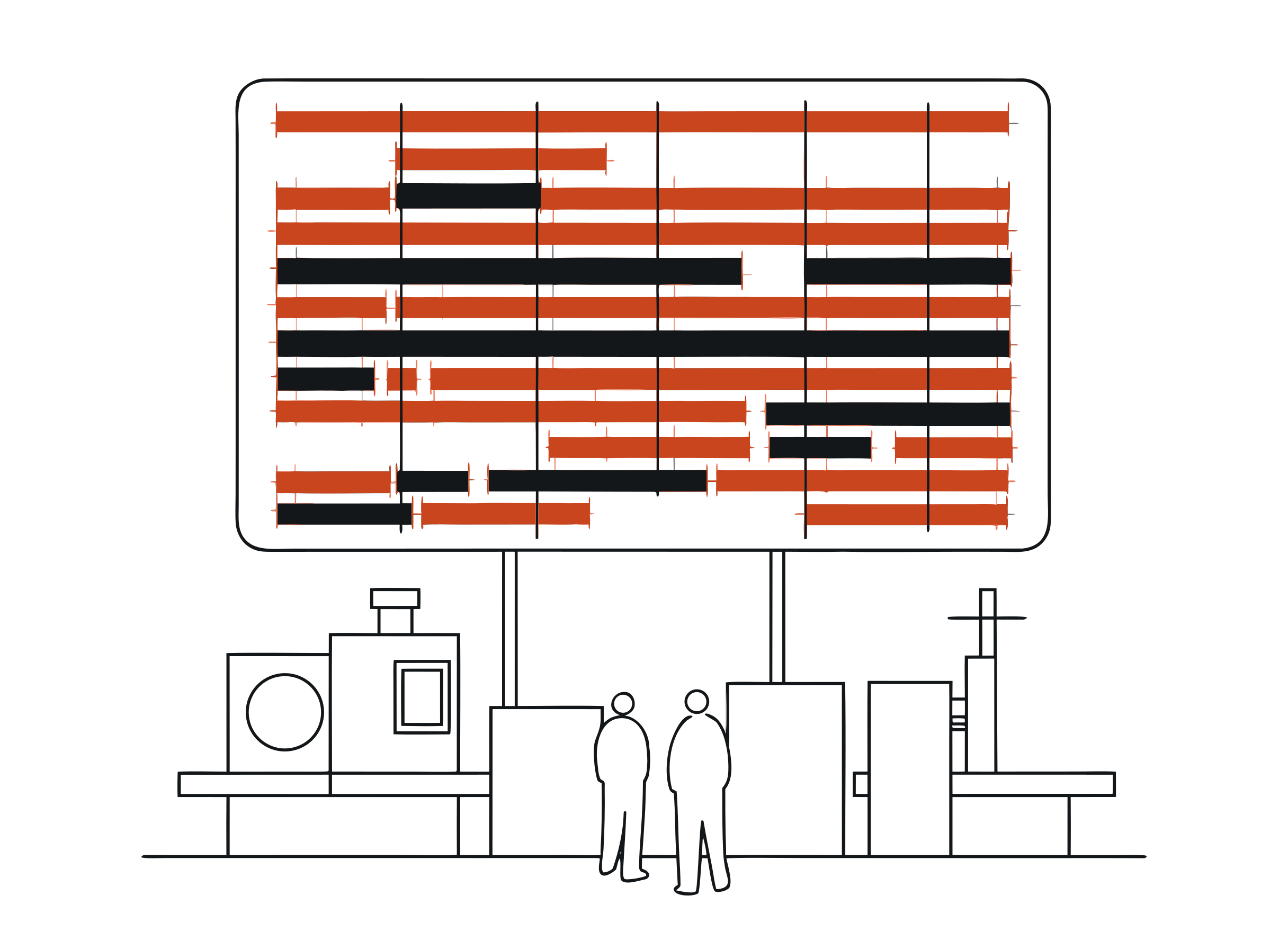
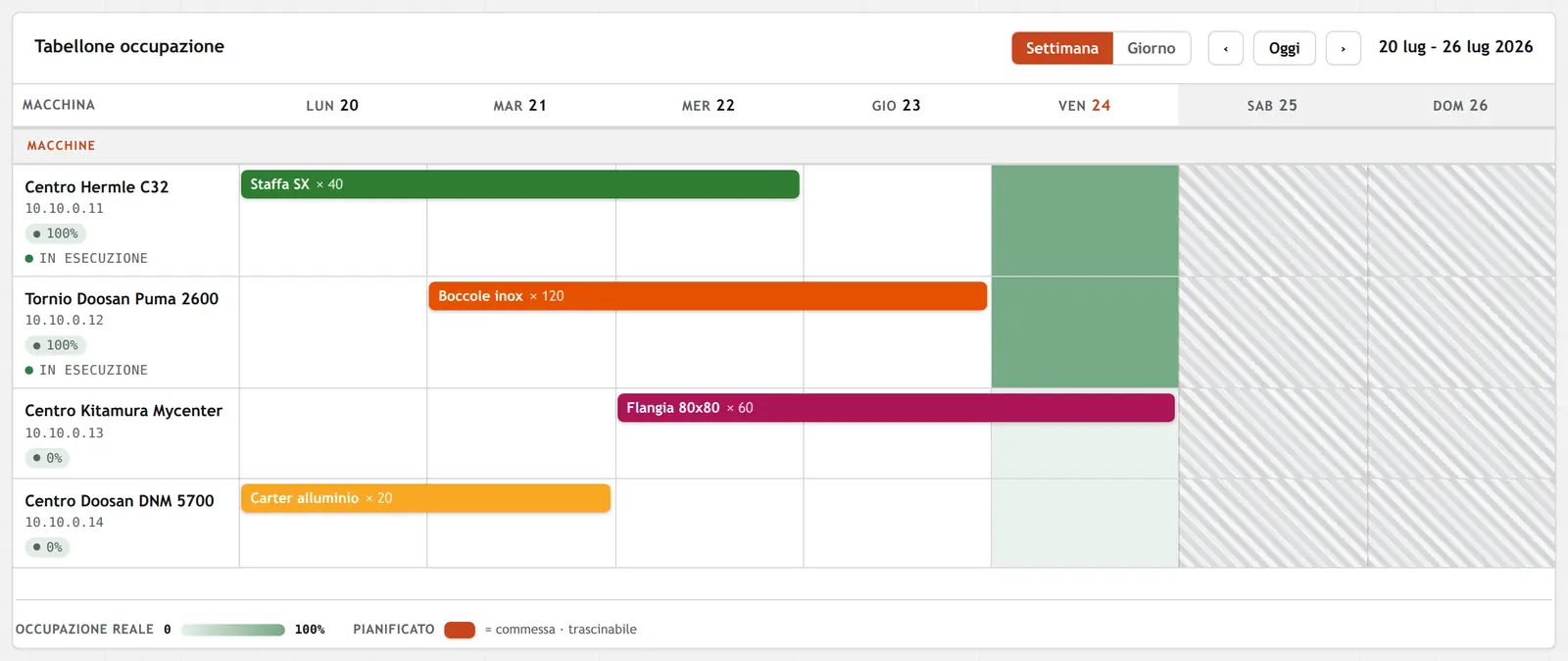
Who's running what. And when it's done.
When the customer calls and asks when it will be ready, the answer is on the screen — not in someone's memory.
Three things we don't do
- We don't command the machine. We read it and we confirm it: no software of ours moves an axis.
- It's not a timeclock. We measure the machines, not the people.
- The data never leaves the workshop. On your server, not ours. No subscription to keep it alive.
The maths, do it yourself.
Taking a program to the machine: 15 minutes, four times a day. Conservative numbers from a real machine shop: the USB-stick round trips, the measurements taken at the machine, the edits made at the control.
Do the real example with your own numbers, in 30 days, on your own machine. A conservative estimate, not a promise of savings: your floor will have its own numbers, and the site survey exists to put them on the table.
How it starts.
One hour, at your place
We come to the workshop for the preliminary analysis and map the fleet: what control each machine has, what network is there, what connects and what doesn't. From that we prepare an assessment of your own situation, old machines and new. Without this step we don't start, and we make you no promises.
Thirty days on trial
A single machine — usually the oldest one. No cost, no commitment: your own data does the talking. At the end there's a straight answer: it can be done, or it can't. And the shop-floor numbers gathered in those thirty days stay yours, whichever way it goes.
The whole floor
If the pilot talks, we connect the rest, put the program archive on your server and hang up the board. Licence per site: the software stays yours.
Who is behind ERGANE.
More than 25 years on shop floors and in customers' offices taught us one thing: no shortcuts and no middlemen. We stand behind work done properly and systems that grow over time. Whoever looks after ERGANE looks after you.
Developed on the shop floor. Conceived, developed and supported by NS Net Source Sagl, and tested in production: ERGANE works in a machine shop every day, across different makes and vintages, against real deadlines.
Already on the shop floor? Walk in with ERGANE.
Anyone selling machine tools, CAM, presetters or service is in the workshop before we are — and the owners trust them. If that's you: bring ERGANE to your customers, we'll handle the technical side.
- We run the first demo together. After that you can run it yourself: connect the oldest machine and let it speak.
- Your share is agreed up front, in writing, and follows what you bring: the customer, the demo, first-line support.
- The customer stays yours. We do the connection and the software — we don't go around you.
Let me try connecting the oldest machine you have. If it doesn't talk, it cost you nothing.
Tell us how many machines you have, which makes, and — if you know — which control they run. We'll tell you what connects, no waffle.
ERGANE is in production today at a machine shop in Ticino, on a mixed fleet of different makes and generations. The case, in full →